Tuesday, April 26, 2011

massage for animals

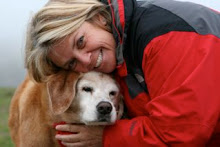
People love touch and animals love touch. Touch is healing. Massage can help an animal in pain or just pure comfort. It has been researched that premature babies or any baby for that matter, grow at a faster rate with touch.

Animals have a need for touch. If their tummy is upset they will most likely roll over and expose their underside to you. They will soften under your hands and respond to the energy. Trust is developed through one’s touch.

When you touch your animal, be present. Being mindful is key. Your intent in your touch is also very important. Think and feel about the energy coming from your heart down your arms and into your hands. Project that energy out past your hands into their body and touching their heart. You will see the affects happening right under your touch. You can be still and light as a feather or apply a little more pressure. Watch the animals reaction to see what pressure of touch they respond to. Think about being a conduit for the energy and love passing from you to the animal. Take your time and connect.

Dogs, horses and cats love the area over their hearts massaged. They also love the area on top of their head between their ears rubbed in small circles. Many times a dog will moan with pleasure. Cats may start to purr and get a pleasurable look in their eyes. They will receive your touch and let you connect with them in a deeper way.

Linda Tellington-Jones developed the Tellington Touch for animals. Most people in the animal community are familiar with her work. Her grandfather taught her horse massage. The modality she teaches through Tellington-Touch has 20-plus hand positions combined with varying tempos, techniques and pressure. “T-touch is a language beyond words that deepens the appreciation and connection between humans and their animal friends”, says Linda Tellington-Jones. She also talks about awakening humans to the benefits of touch through their connection with the animal and how it can be a sael-help technique to reduce their own anxiety, pain, stress and tensions.

Touch is healing for all of us. Regardless if it is a 3 minute session to an hour session with your pet, you both will benefit from the mindful touch.


Barbara Tapella

www.mypetfirst.com and www.barbaratapella.massagetherapy.com


Sunday, April 3, 2011

Touch can relax your nervous system

Did you know that just a slight intentional touch on your shoulder or back can help you get connected with yourself. Being more present in your body? We all love hugs right? Well, most of us! A fully "present" hug is worth a million bucks.

That is why we are attracted to people that actually touch us when having a verbal conversation. It can go hand in hand with what you are saying and people really FEEL that.

Julie and I were in a slight rear-ender one night a few years back. We got out of the car to meet up with the guy who rear ended us. He so upset with his actions, he apologized profusely. Julie and I could see that his nervous system was frantic, we both felt bad for him. Then Julie reached out and slightly squeezed his forearm as if to say "it's ok"...he visually calmed down. She combined that touch with "it's ok, are you alright?" She left her hand on his arm for 15 seconds or so and it was a kind touch. No harm was done to the car. One could feel the energy shift and my guess is that he released the trauma a little quicker as he drove off after we finished our interaction with him.

Guess what? He sent us flowers the next day, thanking us for being so understanding.

We felt as if our interaction with him was healing for all of us. I still remember seeing Julie's touch and reaching out to him and observing what his automatic bodily response was.

Reach out and touch someone...it makes a difference in their lives. Touch is healing.

Saturday, March 5, 2011

The Power of Pets
Facilitating Healing on All Levels

By Shirley Vanderbilt


Originally published in Body Sense magazine, Spring/Summer 2004.
Copyright 2004. Associated Bodywork and Massage Professionals. All rights reserved.


Whether it's a wet lick on the face or a gentle brush to the leg, our pets are unabashedly open in displaying their love and affection for human owners. They could care less about our physical appearance or success in life. They are the ultimate love agents of nature -- always loyal, compassionate and unconditional in their attachment.

The animal-human bond is as old as time and for good reason. Pets bring us into the present moment, awakening our basic instinct to love and be loved, to connect at the spiritual level and to play with abandon. It's no wonder that pet therapy is steadily making its way into many healing practices, from hospitals to rehabilitation programs. A close relationship with the animal kingdom is good for our souls, but can also have some amazing effects on our bodies as well.

In this bustling, stressful modern world, scientific studies have found that just stroking a dog or cat can lower your blood pressure and heart rate, not to mention what it does for your pet. This calming influence leads us to a more balanced life, taking time for the intimate moments of sharing and caring. Especially for the elderly and those who live alone, caring for a pet provides a clear sense of purpose and a feeling of being needed. And for children, as well as some wayward adults, it enhances responsible behavior and a deep respect for other living things.

Touch is one of our most basic needs and without it our body and spirit suffer. Petting a dog or cat provides this essential stimulation to our largest organ, the skin, in much the same manner as the touch-based healing practices of massage and bodywork. It creates a similar flow of energy in which both the giver and receiver can benefit.


A Certain Friend
There is a peacefulness inherent to the rhythm of life in the animal kingdom. Watching the steady breathing of a sleeping dog, listening to the gentle purr of a cat or being mesmerized by the graceful swimming of fish in an aquarium brings us into that sacred space of attention to life at its most fundamental essence. In this state, worries and anxiety disappear, and for the moment, our own body and mind are entrained into this same calm balance.

According to Dr. Marty Becker, author of The Healing Power of Pets, "Part of the healing power of pets is their capacity to make the atmosphere safe for emotions, the spiritual side of healing." Attuned to our moods and needs, they allow us to express ourselves without fear of judgment and will remain faithfully by our side. It is this sixth sense of attunement and compassion in animals that makes them perfect partners in the healing process for people with disability or illness.

For example, horses used in riding therapy for physically-challenged children and adults show a special sensitivity to the fragility and needs of their riders. The movement of the horse works the body like physical therapy, while the accomplishment of riding skills instills self-confidence and a sense of worth in the rider. In animal-assisted therapy, children who have difficulty forming attachments because of abuse and neglect begin to learn the value of safe and comforting touch when they forge a bond with loyal four-legged creatures. Some nursing and rehabilitation centers have opened their doors to animal visitors, even permanently adopting cats and dogs to the delight and benefit of residents.

Pets also heal what ails us by inspiring us to get up and go. We know that exercise is one of the most important factors in maintaining good health. The benefits of daily walking have been well documented, from weight loss to overall improved physical functioning. Outdoor excursions with the family dog not only dispose us to a more active lifestyle but also increase our chances for socializing with other animal lovers.

Animal companionship is especially life-enhancing for seniors. In the midst of losing friends, life partners and physical abilities, the routine of feeding and caring for a pet keeps the mind alive and the body active, bringing a sense of normalcy to what many elders perceive as a declining life situation. In a similar manner, for those suffering from depression a pet serves as a good reason to get out of bed in the morning and focus on something positive. For children, having a pet is an important part of their development in learning respect, responsibility and love.


Quiet Lessons
The presence of a pet in the home enhances our lives in many ways. They lighten up our darkest moments and create an outlet for playful interaction. They teach us to be disciplined and mindful. They also have much to teach us about the cycle of life -- the exuberance of youth, the heart-warming rewards of a long-term relationship, and the acceptance of old age and death.

When choosing your special companion, consider what size and type of pet is best suited to your physical abilities and lifestyle as well as your home. Cost of care, potential allergies and time required to keep your pet healthy, happy and secure are all important factors in this decision. For those with physical limitations, a low maintenance pet such as a bird or fish can still provide the benefits of this close bonding with nature. Our beloved pets, whatever form they come in, serve as a symbol of our connection to the universe -- that common denominator of unconditional love.

Shirley Vanderbilt is a staff writer for Body Sense magazine.

Saturday, January 29, 2011

on the computer all day?

January 12, 2011, 2:43 pm

The Hazards of the Couch

Sean Marc Lee/Getty Images

Many of us sit in front of a computer for eight hours a day, and then go home and head for the couch to surf the Web or watch television, exchanging one seat and screen for another. Even if we try to squeeze in an hour at the gym, is it enough to counteract all that motionless sitting?

A mounting body of evidence suggests not.

Increasingly, research is focusing not on how much exercise people get, but how much of their time is spent in sedentary activity, and the harm that does.

The latest findings, published this week in The Journal of the American College of Cardiology, indicate that the amount of leisure time spent sitting in front of a screen can have such an overwhelming, seemingly irreparable impact on one’s health that physical activity doesn’t produce much benefit.

The study followed 4,512 middle-aged Scottish men for a little more than four years on average. It found that those who said they spent two or more leisure hours a day sitting in front of a screen were at double the risk of a heart attack or other cardiac event compared with those who watched less. Those who spent four or more hours of recreational time in front of a screen were 50 percent more likely to die of any cause. It didn’t matter whether the men were physically active for several hours a week — exercise didn’t mitigate the risk associated with the high amount of sedentary screen time.

The study is not the first to suggest that sedentary activities like television viewing may be harmful. A study last year found that men who spent more than 23 hours a week watching TV and sitting in their cars were more likely to die of heart disease than those who sat for 11 hours a week or less, even if they exercised. And a 2009 study reported that young children who watch one and a half to five and a half hours of TV a day have higher blood pressure readings than those who watch less than half an hour, even if they are thin and physically active.

Another small study found that when overweight adults cut their TV time in half, they burned more calories than those who watched five hours or more a day. Children whose TV time is cut tended to eat less, but that wasn’t true for adults. And the light activities adults filled their time with, like reading and playing board games, actually burned more calories than watching TV.

In both the United States and Britain, people are spending three to four hours a day on average watching television, said the study’s author, Emmanuel Stamatakis, of the department of epidemiology and public health at University College London.

“This is excessive,” he said. “It is more than 20 percent of total waking time for most people.” And, he added, “it’s 100 percent discretionary.”

During the study’s follow-up period, from 2003 to 2007, 325 men died of various causes, and 215 suffered a heart attack or other cardiac event. Even after adjusting for differences in weight, smoking, occupational physical activity and risk factors like diabetes, high blood pressure and other longstanding illnesses, as well as marital status and social class, those who spent four hours or more of their leisure time in front of a screen each day were 50 percent more likely to have died. Those who spent two hours a day in front of a screen for entertainment were 2.2 times more likely to have had a cardiovascular event.

Recreational screen time has an “independent, deleterious relationship” with cardiovascular events and death of all causes, the paper concluded, possibly because it induces metabolic changes.

One possible mechanism, demonstrated in animal studies, is that being sedentary may affect lipid metabolism. Prolonged inactivity appears to sharply reduce the activity of an important enzyme called lipoprotein lipase, which is responsible for breaking down circulating blood lipids and making them available to muscles for energy, Dr. Stamatakis said. Lowered enzyme activity leads to higher levels of fats and triglycerides in the blood, and to a higher risk of cardiovascular disease. Exercise has very little impact on the enzyme’s activity, he said.

Extended sitting may also lead to high levels of low-grade inflammation, which can also lead to heart disease, Dr. Stamatakis said. A marker of low-grade inflammation called C reactive protein was about three times higher in the study participants who spent the most time slouched in front of a screen.

The study focused on recreational screen time because it’s the easiest to curtail, Dr. Stamatakis said. But he encouraged employees who work at computers all day to get up and take breaks and short walks periodically.

Tuesday, January 4, 2011

boost your Immune System this time of year

Boosting Your Immune System
It is important to support your immune system at this time of year. The flu and cold season is starting, hits its peak in February and winds down in March. You can help protect yourself by taking certain vitamins, minerals and homeopathy.


Vitamin C:

Take a lot of Vitamin C as soon if you feel any symptoms, or if people around you are getting sick. Take 3000-5000mg three times a day. If you experience loose stools, decrease the amount until you stabilize.


Elderberry:

It helps support your immune system and there is documentation that it speeds up your recovery time.


Ginseng (Panex Quinquefolium):

Groups taking Panex demonstrated a decrease in the number of colds and decreases recovery time by a third.


Oscillococcinum:

A homeopathic flu remedy that definitely helps speed your recovery.


Wellness formula:

Has Golden Seal and Echinachea


AND SLEEP!!!! It's the best medicine.


Here are basic habits to protect you and your family from spreading cold and flu germs:

  • Limit your exposure to people who are sick.
  • If you are sick, stay home from work to speed your recovery and decrease your exposure to others.
  • When you sneeze, cover your mouth and nose with a tissue, your inside elbow or your sleeve, NOT YOUR HAND. This decreases the spread of airborne germs.
  • Wash your hands frequently.
  • WASH YOUR HANDS FREQUENTLY! (did I mention????....)
  • WASH YOUR HANDS FREQUENTLY!

Wednesday, December 29, 2010

Happy New Year! Self Massage a Specific spot.

Hope everyone is well!!! Sometimes we tend to have a few too many alcoholic drinks around this time of the year. If you have a hang over....or just feel sluggish from too many toxins swimming around in your body, I have a spot you can massage on yourself to help you.

On your forearm, top side, near your elbow. Take your opposite hand and place your index and middle finger tips and press into this tissue. It will most likely be sore. Press in and rotate your finger tips deep into the tissue, then hold for 1-3 minutes. Repeat 3 times.

There is also a potent spot on your hand. At the base of your thumb, the meaty mound, squeeze and rub. (If you can get someone to help you, it may feel better). Then take your opposite hand and PINCH into the web of the hand between your thumb and index finger. It will feel sore. Pinch and rub for 3-5 minutes. This will help to relieve your symptoms.

Wednesday, May 12, 2010

living with breath

Really stay present in the moment and try to focus on what is in front of you. This can be a challenge. Step back and deal with what is right in front of U.
Take deep a breath, hold it for several counts and then exhale. I do this several times throughout the day. I count seven seconds breathing in, hold it for six seconds, and then slowly exhale. I find I am getting better doing it while I drive and it really relaxes me as I go from home to work or an appointment, or back home after a long day.
Plan regular social activities with friends where you sit and converse and share a meal or a nice walk.
Sending text messages does keep us in touch, but it removes all the personal body language signals from a one-on-one interchange.
Follow some fitness plan that helps you increase your circulation and flexibility.
We can only move or stimulate our lymphatics via muscle contraction.
Get out there and move and do not forget to drink water.
Sit down and take some time to think about your life and what goals you want for yourself.
Sometimes I get too focused on all the daily details and need to remind myself the goals for the month, year and next five years. You cannot get where you want to go if you do not set a destination!!
Do not to forget to ask for help. It is really important to know when to ask for help and realize the person will feel good to be able to help you. It will help you avoid burnout from always having to do everything yourself.
Give yourself some morning ritual where you take a few moments for yourself.
Sit and meditate or journal for a page or draw tarot cards to set the intention for your day.
Always speak and think kind and gentle thoughts to and about your SELF.
Remember that laughter is the best medicine!